
When the Maccabees finally liberated Jerusalem and entered the Temple, their first desire was to restore the sacred service and rekindle the Menorah. But as they searched through the ruins, they discovered that nearly all the oil flasks had been defiled by the Greeks. Only a single small flask remained untouched — just enough oil to last for one day. Yet, according to tradition, a miracle occurred: that lone flask burned for eight full days, long enough for new pure oil to be prepared.
This moment became the heart of the Hanukkah story. The military victory was extraordinary, but the miracle of the oil symbolized something deeper — the endurance of light even in the darkest times, and the ability of the Jewish spirit to shine far beyond what seems possible.
To commemorate this miracle, Jewish communities developed a beautiful and delicious custom: eating foods prepared with oil. The oil in our kitchens becomes a reminder of the oil in the Temple, connecting our holiday tables to the ancient Menorah whose light refused to fade
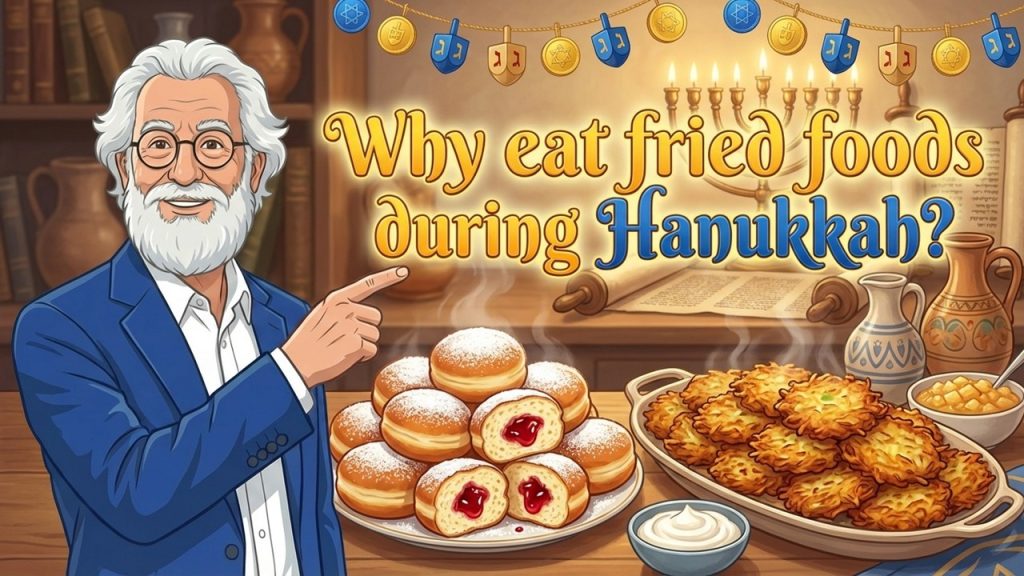
Over the generations, different Jewish communities created their own traditional Hanukkah foods, all centered around this theme. In Israel, the most iconic treat is the sufganiya {סופגניה}, a soft, sweet doughnut filled with jam or chocolate and dusted with sugar. Another beloved classic is the levivah {לביבה}, the crispy potato pancake that fills homes with the unmistakable aroma of Hanukkah. Each bite carries the memory of the miracle — a small flame that burned far longer than anyone expected.
So as families gather around the Menorah, singing songs and enjoying the warmth of the candles, the holiday’s flavors complete the experience. The oil in the pan becomes part of the story, a culinary echo of the ancient light that continues to inspire.
Beteavon! {בתיאבון} — and may your Hanukkah be filled with light, joy, and good food.