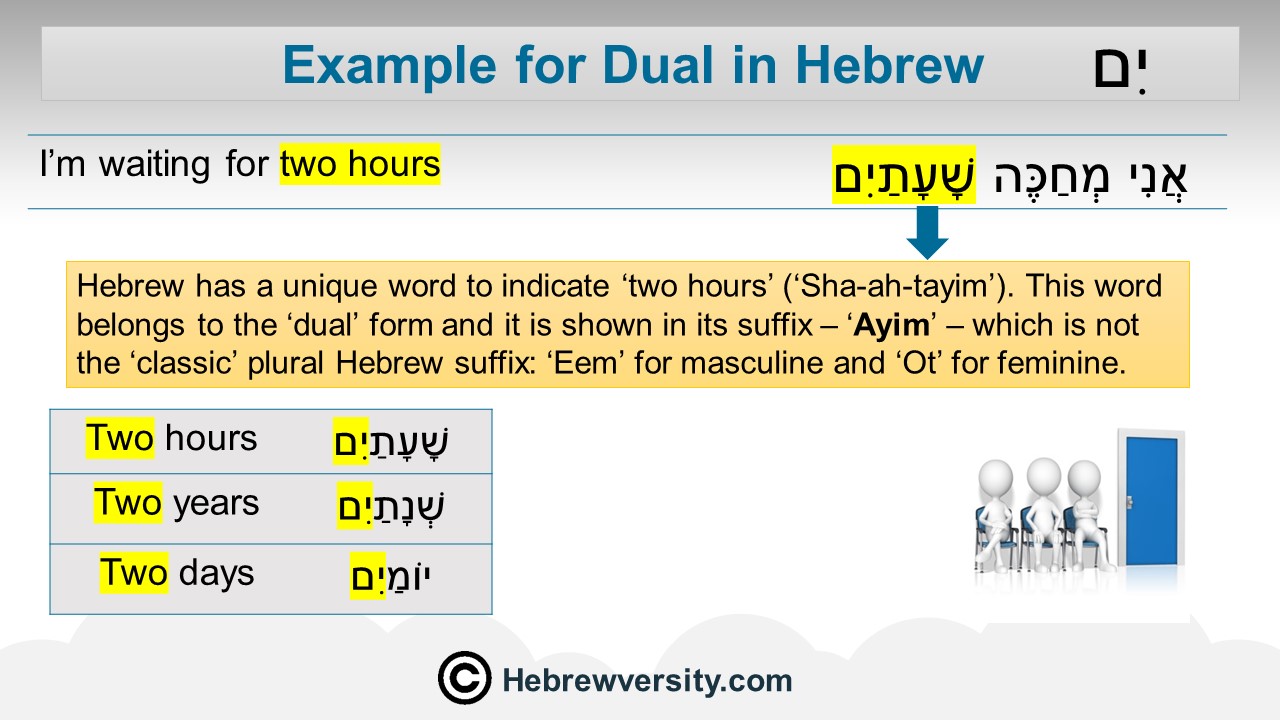
Hebrew grammar includes a unique number category called the dual (זוגי), used to express exactly two of something. Unlike singular (one) and plural (three or more), the dual form is reserved for nouns that naturally appear in pairs or refer to two units. It’s marked by the suffix –ַיִם (-ayim), which replaces the standard plural endings.
Dual Words for Time and Numbers
The dual form is most commonly found in words related to time and numerical units. These are considered “true duals” because they refer to precise quantities of two.
Examples include:
- שָׁעָה → שָׁעָתַיִם – one hour → two hours
- יוֹם → יוֹמַיִם – one day → two days
- שָׁנָה → שְׁנָתַיִם – one year → two years
- שָׁבוּעַ → שְׁבוּעַיִם – one week → two weeks
- חֹדֶשׁ → חָדְשַׁיִם – one month → two months
- מֵאָה → מָאתַיִם – one hundred → two hundreds
- אֶלֶף → אַלְפַּיִם – one thousand → two thousands
These dual forms are fixed and must be memorized as vocabulary. They are used frequently in everyday Hebrew, especially when talking about time durations, dates, and quantities.