
Hebrew script has evolved over centuries into several distinct styles. Each style serves a unique purpose in Jewish life and communication. Below are the main Hebrew fonts used today:
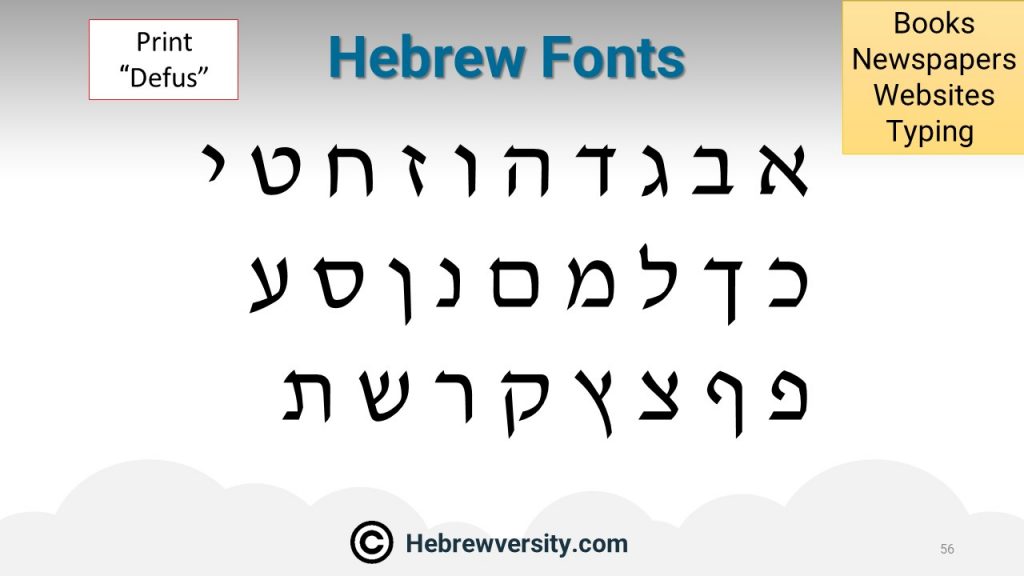
Hebrew Print (דפוס)
This is the standard font used in books, newspapers, and formal writing. The letters are clean and structured for easy reading.
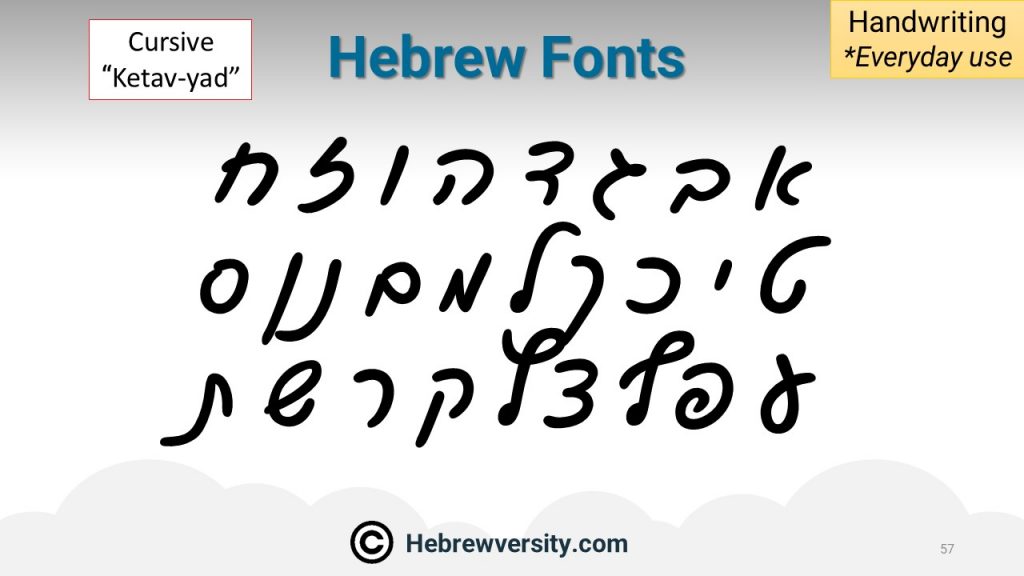
Handwriting (כתב יד)
This cursive style is used in everyday writing. The letters connect smoothly, making it quicker to write than print.
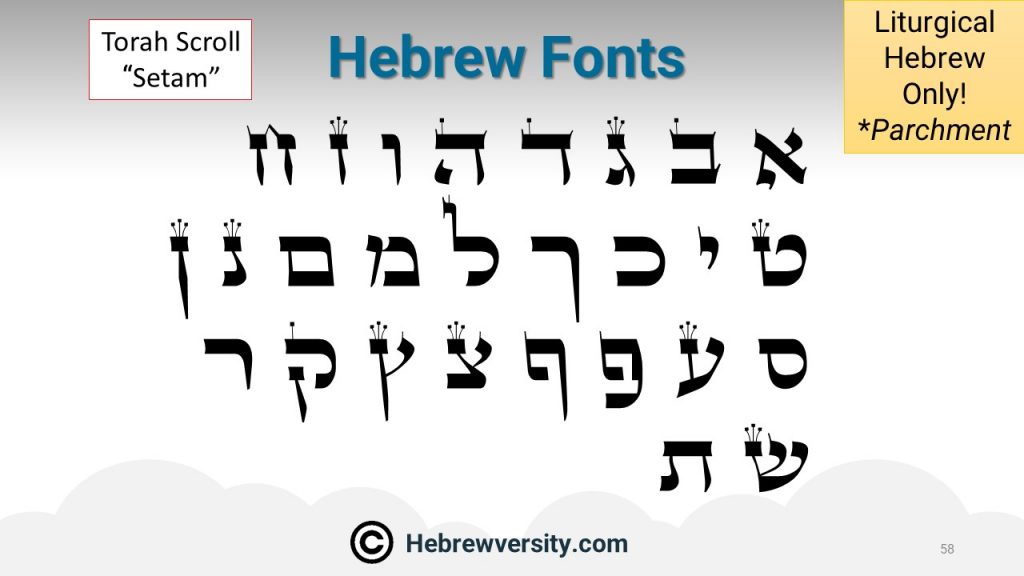
STaM Script (סת״ם)
Used in sacred texts like Torah scrolls, mezuzot, and tefillin. Each letter is written with precision to preserve holiness and tradition.
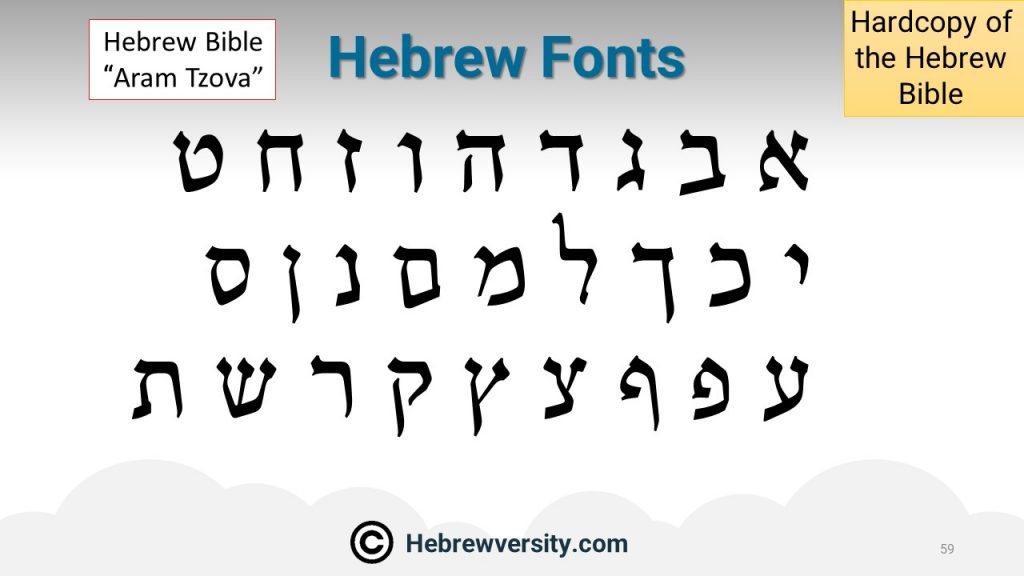
Aram Tzova Script (ארם צובא)
This unique style appears in the Aleppo Codex. It reflects the work of medieval Masoretes who carefully edited and vocalized the biblical text. Their version forms the basis of today’s Hebrew Bible.
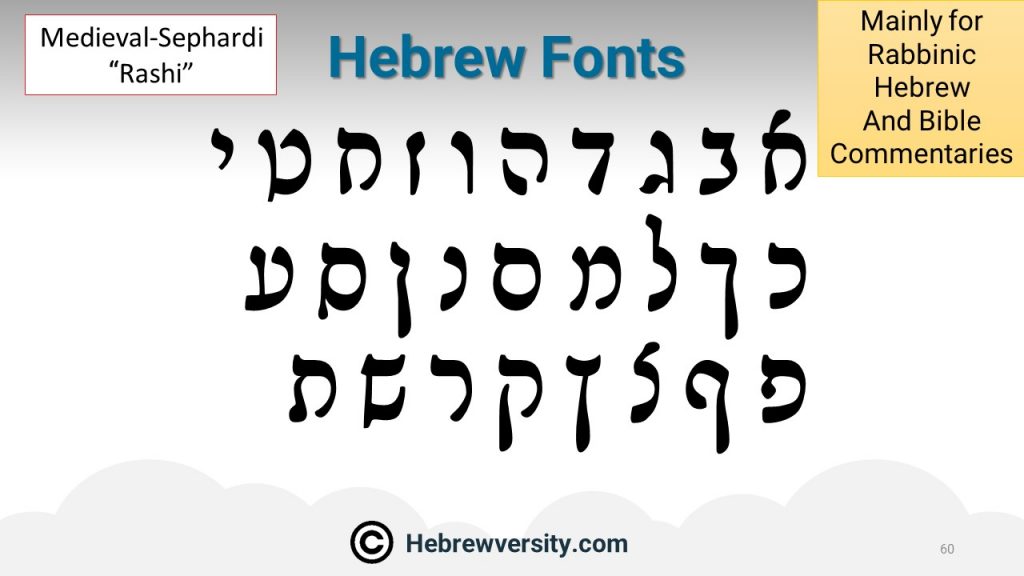
Rashi Script (כתב רש״י)
Traditionally used for commentaries, especially those by Rashi. Though it looks different from standard print, it’s not a separate alphabet – just a distinct typeface that sets commentary apart from the main text.
Understanding these fonts gives you deeper insight into Hebrew’s cultural and historical layers. Whether you’re reading a Torah scroll or jotting down a note, each style tells its own story.