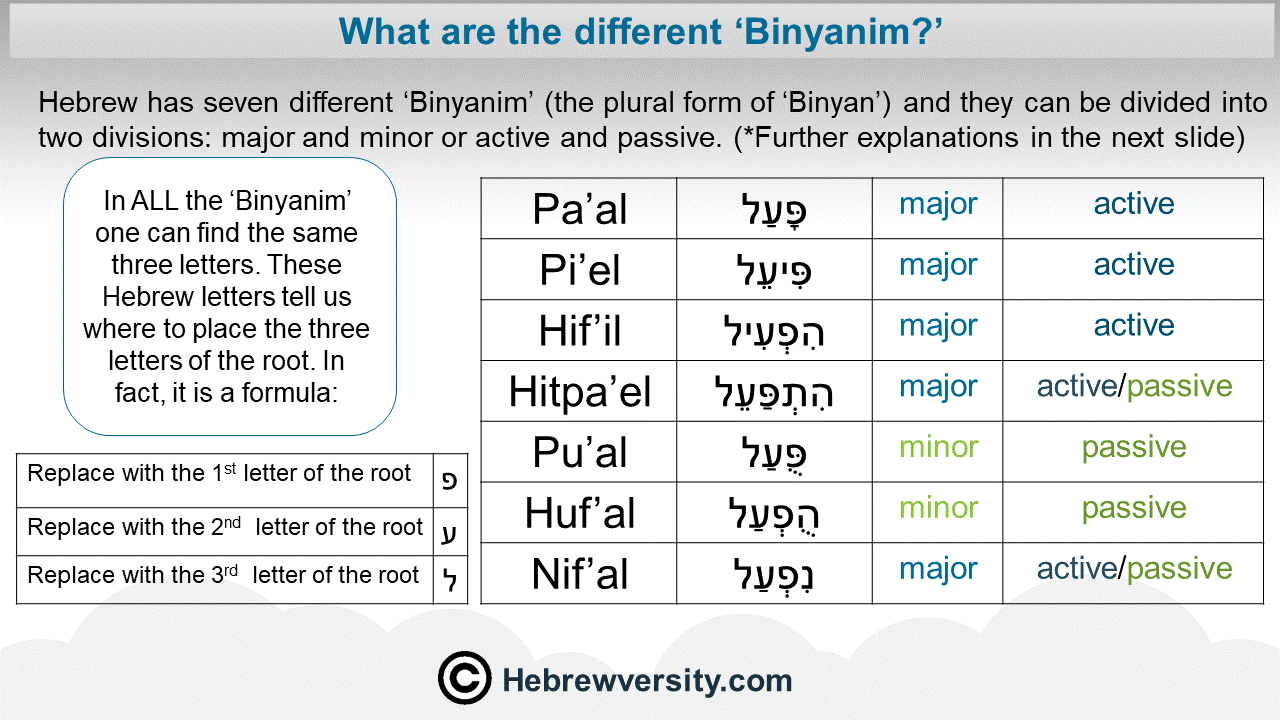
Hebrew verbs are built on a unique and elegant system that combines roots, patterns, and inflections. Understanding how Hebrew verbs work is key to mastering the language, as verbs carry rich grammatical information about tense, gender, number, and person.
Roots and Patterns
At the heart of every Hebrew verb is a root (shoresh) – usually made up of three consonants. This root conveys the core meaning of the verb.
For example:
- The root כ.ת.ב (k.t.v) relates to writing
- The root א.כ.ל (a.k.l) relates to eating
These roots are placed into verb patterns called binyanim, which shape the verb’s meaning and grammatical behavior. Each binyan has its own structure and voice (active, passive, reflexive, etc.).
Tenses
Hebrew verbs are conjugated in three main tenses:
- Past (avar) – actions that already happened
- Present (hoveh) – actions happening now
- Future (atid) – actions that will happen
Each tense has its own set of forms based on gender, number, and person.
Agreement and Conjugation
Hebrew verbs must agree with the subject in:
- Person: first, second, or third
- Gender: masculine or feminine
- Number: singular or plural
This means that a single verb root can produce dozens of different forms depending on context.
Example: Root כ.ת.ב (“to write”)
| Tense | Example Form | Translation |
| Past | כתבתי (katavti) | I wrote |
| Present | כותב (kotev) | He writes |
| Future | אכתוב (echtov) | I will write |
This system may seem complex at first, but it’s highly logical and consistent. Once you learn the patterns, you’ll be able to recognize and produce a wide range of verbs with confidence.