
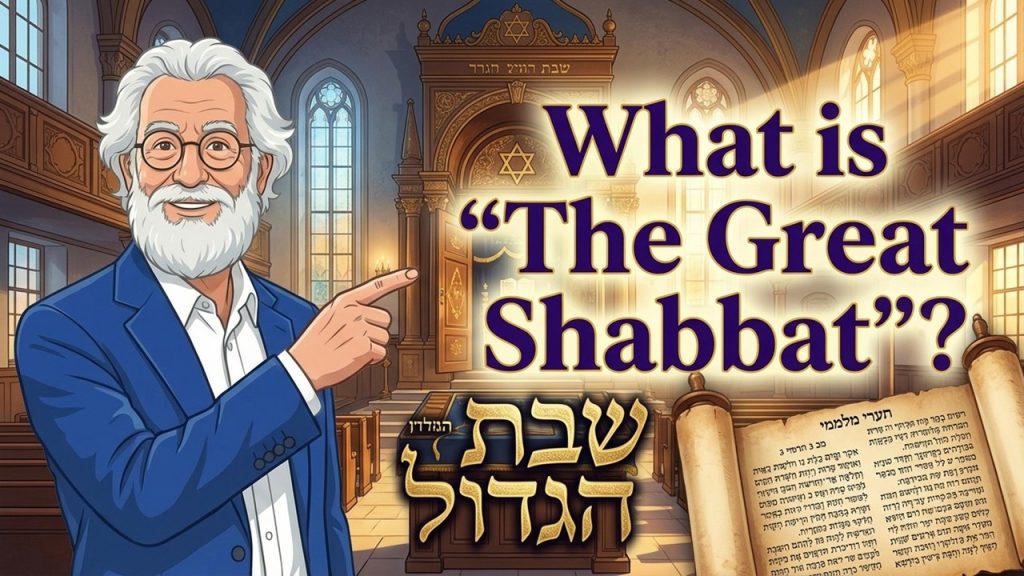
As the festival of Passover approaches, the Shabbat that immediately precedes it carries a special name and a unique atmosphere. This Shabbat is known throughout the Jewish world as “Shabbat Ha‑Gadol” {שבת הגדול}, literally “The Great Shabbat.” Its meaning is layered, rooted both in ancient tradition and in the spiritual themes that lead us into the holiday of freedom.
Because this Shabbat stands on the threshold of Passover, the synagogue reading includes a special Haftarah from the final chapter of the Book of Malachi. This prophetic passage speaks about renewal, justice, and the promise of redemption — themes that naturally echo the story of the Exodus. The closing verse of the Haftarah mentions the coming of Elijah the Prophet before “the great and awesome day of the LORD,” and many see in this phrase the origin of the name Shabbat Ha‑Gadol. Elijah is deeply connected to the Passover Seder, symbolizing hope and the future redemption, so his appearance in the Haftarah reinforces the sense that this Shabbat marks a spiritual turning point.
Over the generations, another explanation also became part of Jewish tradition. According to rabbinic teachings, a great miracle occurred in Egypt on the Shabbat before the Exodus, when the Israelites publicly prepared the Passover lamb — an act that could have provoked the Egyptians, yet no harm came to them. This moment of courage and divine protection was remembered as a “great” event, and the Shabbat on which it occurred became known as Shabbat Ha‑Gadol. Even though the historical date of the miracle does not always fall on Shabbat, the commemoration was fixed to the Shabbat before Passover, giving it a special character year after year.
In many communities, Shabbat Ha‑Gadol also became associated with extended teaching and preparation. Rabbis traditionally delivered a longer sermon on this day, guiding the community through the laws of Passover and offering spiritual insights for the holiday. Over time, this practice added another layer of meaning to the name — a “great” Shabbat not only because of its history, but because of the depth of learning and reflection it invites.
Interestingly, the idea of a “great” Shabbat connected to Passover appears even in early historical sources. By the first century, this term was already known, showing that the special status of this Shabbat has deep roots in Jewish memory.
Today, Shabbat Ha‑Gadol continues to serve as a bridge between the ordinary rhythm of the year and the transformative experience of Passover. It invites us to pause, prepare, and elevate ourselves — to step into the story of redemption with clarity, intention, and a sense of spiritual readiness.