
Today is Tu Be‑Shevat {ט״ו בשבט}, the fifteenth day of the Hebrew month of Shevat — the eleventh month of the Hebrew calendar. Although it is a relatively quiet holiday compared to the major festivals, Tu Be‑Shevat carries deep symbolic meaning and has been celebrated for centuries as a moment of renewal, growth, and connection to the natural world.
In the Mishnah, Tu Be‑Shevat is referred to as the “New Year of the Trees.” This designation originally had legal significance: it determined the age of trees for agricultural laws such as orlah (the prohibition on eating fruit from a tree during its first three years) and ma’aser (tithing). Because these laws depend on the tree’s “birthday,” the sages established Tu Be‑Shevat as the point in the year when trees are considered to have entered a new stage of growth.
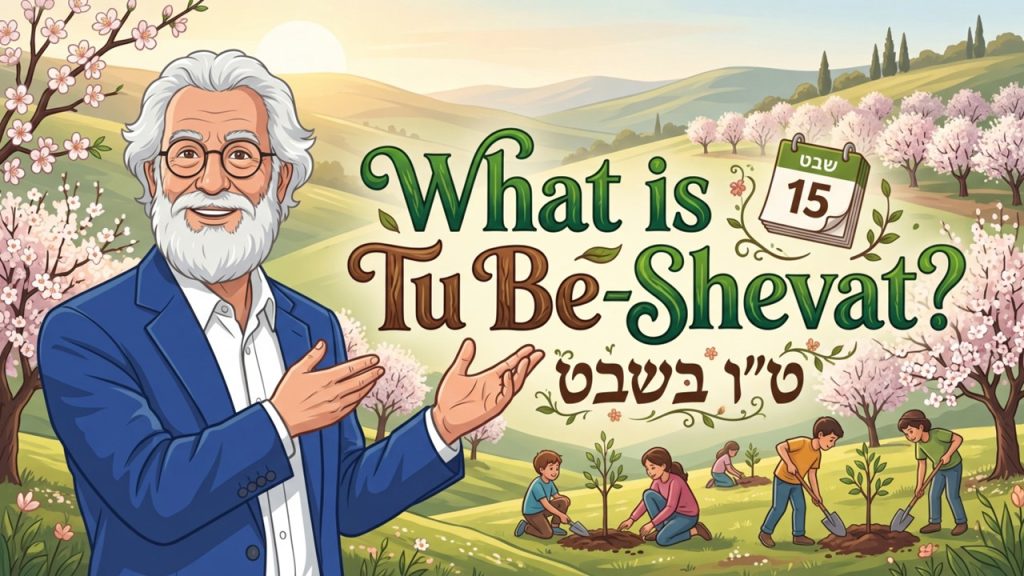
Over time, this agricultural marker evolved into a meaningful cultural and spiritual celebration. In the Land of Israel, Tu Be‑Shevat often coincides with the first signs of spring. Almond trees begin to blossom, fields start to awaken, and the natural world hints at renewal. For this reason, it became customary to plant new trees throughout Israel on this day — a tradition that continues to be embraced by schools, families, and communities across the country.
Another beloved custom is eating fruits associated with the Land of Israel, especially those mentioned in the Bible. This practice reflects a sense of gratitude for the land’s bounty and a connection to its agricultural heritage. In some communities, Tu Be‑Shevat even developed into a kind of symbolic “Seder,” inspired by the structure of the Passover Seder, where participants eat fruits, drink wine, and reflect on themes of growth and spiritual renewal.
Tu Be‑Shevat also holds a special place in modern Israeli history. On this very date, the Knesset, Israel’s parliament, was founded. The word “Knesset” {כנסת} in Hebrew means “assembly” or “gathering,” and its establishment on Tu Be‑Shevat added a layer of national significance to a day already rich with symbolism. Just as trees take root and grow, the founding of the Knesset represented the rooting of democratic governance in the modern State of Israel.
Today, Tu Be‑Shevat invites us to pause and appreciate the natural world, to reflect on renewal — both physical and spiritual — and to celebrate the deep connection between the Jewish people, the land of Israel, and the rhythms of creation.