
One of the most distinctive features of Jewish life is the way a new day begins — not at sunrise, and not at midnight, but at nightfall. This rhythm shapes the calendar, the holidays, and the way Jewish communities experience time itself. It’s a pattern that feels ancient, intentional, and deeply connected to the worldview of the Hebrew Bible.
A Day That Begins in Darkness
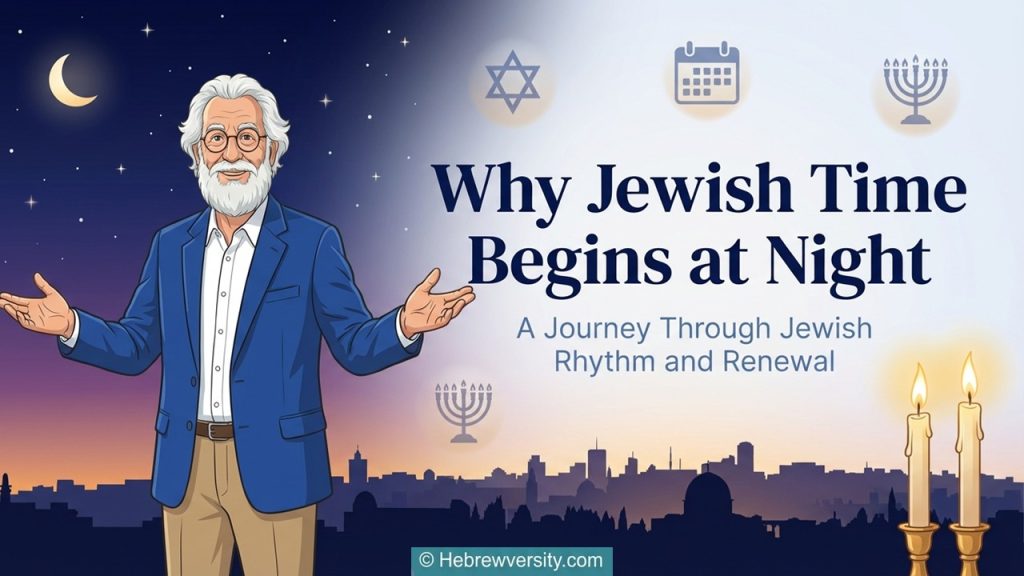
In Jewish tradition, the day starts when the sun sets and the first stars appear. This idea comes from the biblical creation story, where each day is described with the phrase: “And there was evening, and there was morning.” Evening comes first, then morning. Darkness precedes light.
This simple pattern carries a powerful message: renewal begins in hidden places. Growth starts quietly, before it becomes visible.
A Spiritual View of Time
Beginning the day at night reflects a deeper spiritual idea — that light emerges from darkness. Jewish time teaches that challenges, uncertainty, and waiting are not interruptions in life but part of the process that leads to clarity and purpose.
This rhythm encourages patience, reflection, and a sense of hope that tomorrow begins even before we see the sun.
Shabbat as the Best Example
Shabbat beautifully expresses this concept.
It doesn’t begin with a sunrise or a morning prayer. It begins with candles lit at sunset, marking a transition from the noise of the week to the calm of sacred time. The quiet of Friday night sets the tone for the entire day that follows.
The heart of Shabbat is found in the stillness of the evening — a reminder that rest begins with letting go.
A Calendar Built on Cycles of Light
Jewish holidays also follow this pattern.
Passover, Sukkot, Rosh Hashanah, and every festival begin at night. The Jewish calendar is built around the moon, not the sun, and the moon itself is a symbol of renewal that begins in darkness. Each month starts when the moon is barely visible — a thin sliver of light emerging from shadow.
This lunar rhythm reinforces the idea that beginnings are often subtle and quiet.
A Culture That Honors Transitions
Starting the day at night creates a natural pause between one day and the next. Instead of rushing into a new morning, Jewish time invites a moment of reflection. The evening becomes a threshold — a space to reset, breathe, and prepare for what comes next.
It’s a gentle reminder that life is not only measured by productivity and daylight, but also by rest, intention, and inner renewal.
A Different Way of Experiencing Time
In a world that often feels rushed and linear, Jewish time offers a different perspective. It teaches that darkness is not the end of something but the beginning of something new. It encourages people to find meaning in transitions, to welcome quiet moments, and to trust that light will follow.
Jewish time begins at night because life itself begins in hidden places — in the quiet, in the unknown, and in the spaces where potential is waiting to unfold.