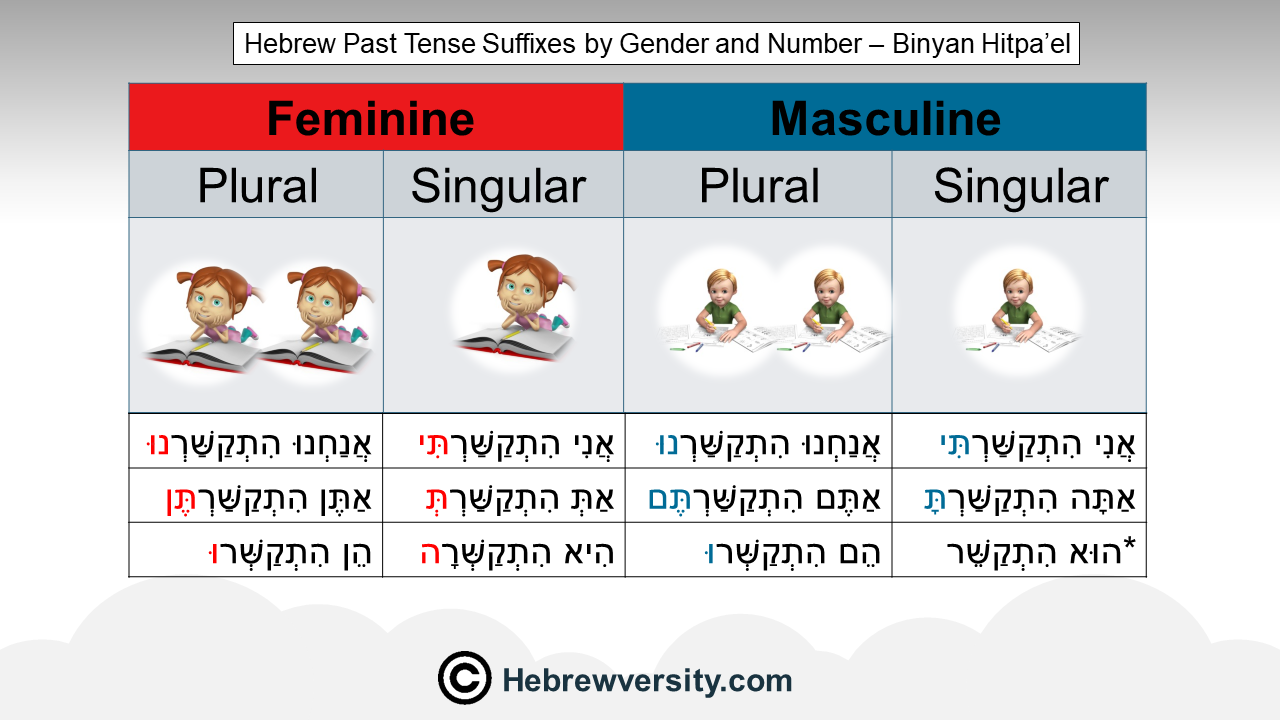
Hitpa’el is the reflexive binyan in Hebrew. In the past tense, it describes actions that the subject performed on itself, mutual actions, or behaviors. These verbs often express personal processes, emotions, or interactions – such as “he got excited,” “she trained,” or “they hugged.”
Structure of Hitpa’el in Past Tense
- Prefix: הִתְ (hit-)
- Vowel Pattern: i-a-e or i-a depending on the form (as in הִתְאַמֵּן – “he trained”)
- Middle Root Letter: Doubled (marked with a dagesh)
The base form is: הִתְפַּעֵל – using פ.ע.ל as the placeholder root
Conjugation Table (Using א.מ.ן – “to train”)
| Person & Gender | Hebrew Form | Transliteration | English Meaning |
| אני | הִתְאַמַּנְתִּי | hit’amanti | I trained |
| אתה | הִתְאַמַּנְתָּ | hit’amanta | You (m) trained |
| את | הִתְאַמַּנְתְּ | hit’amant | You (f) trained |
| הוא | הִתְאַמֵּן | hit’amen | He trained |
| היא | הִתְאַמְּנָה | hit’amnah | She trained |
| אנחנו | הִתְאַמַּנּוּ | hit’amanu | We trained |
| אתם/אתן | הִתְאַמַּנְתֶּם/ן | hit’amantem/hit’amanten | You (pl) trained |
| הם/הן | הִתְאַמְּנוּ | hit’amnu | They trained |
Common Hitpa’el Verbs in Past Tense
| Verb (Past) | Transliteration | Meaning |
| הִתְאַמֵּן | hit’amen | trained |
| הִתְנַהֵג | hitnaheg | behaved |
| הִתְרַגֵּשׁ | hitragesh | got excited |
| הִתְקַדֵּם | hitkadem | progressed |
| הִתְחַבֵּק | hitchabek | hugged (each other) |
Tip for Learners
Hitpa’el verbs in the past tense are easy to recognize by the הִתְ prefix and the doubled middle letter. They often describe personal or mutual actions and are common in both spoken and written Hebrew.