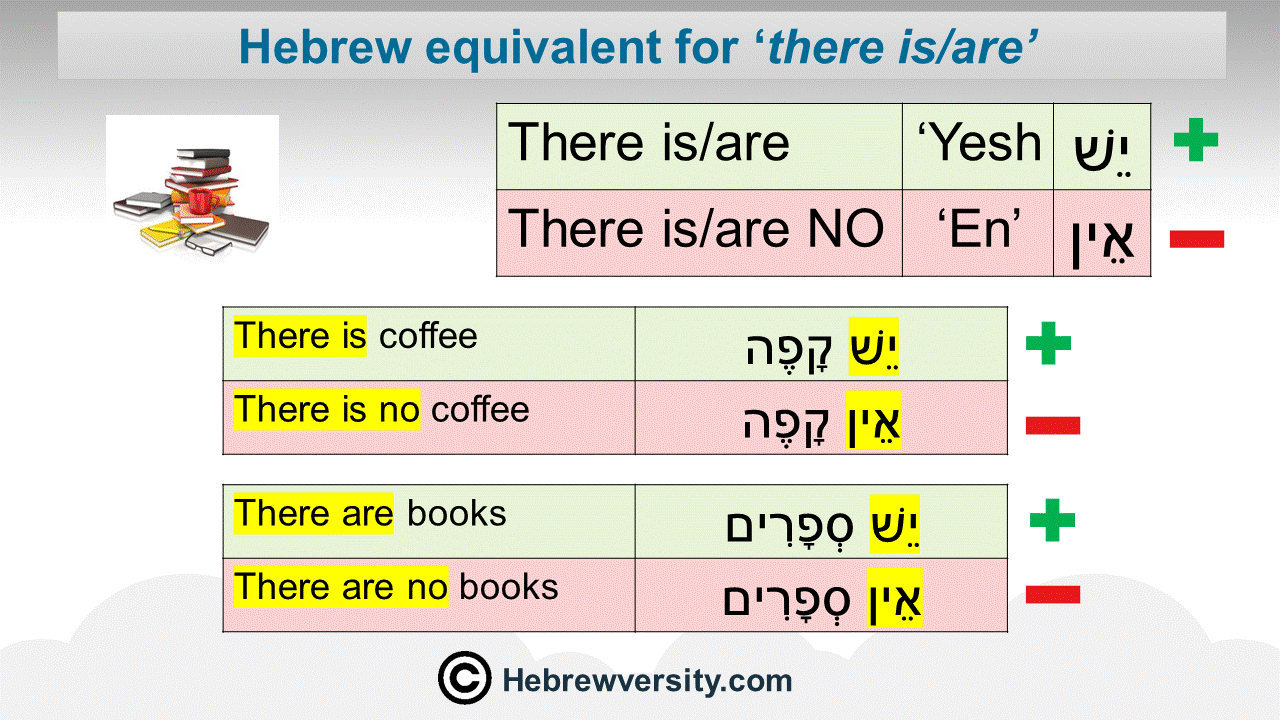
Hebrew expresses existence and possession differently than English. Instead of using verbs like “to be” or “to have,” Hebrew uses special constructions built around the word יש (yesh).
Expressing “There Is / There Are”
To say that something exists or is present, Hebrew uses:
- יש (yesh) – there is / there are
- אין (ein) – there isn’t / there aren’t
Examples:
- יש ספר על השולחן – There is a book on the table
- אין מים בבקבוק – There is no water in the bottle
This structure is used for both singular and plural nouns.
Expressing “Have / Has”
Hebrew does not use a verb for “to have.” Instead, it combines יש (yesh) or אין (ein) with a personal pronoun:
| English | Hebrew (with יש) |
| I have | יש לי (yesh li) |
| You have (m.) | יש לך (yesh lecha) |
| You have (f.) | יש לך (yesh lach) |
| He has | יש לו (yesh lo) |
| She has | יש לה (yesh la) |
| We have | יש לנו (yesh lanu) |
| They have | יש להם/להן (yesh lahem/lahen) |
Examples:
- יש לי זמן – I have time
- אין לה כסף – She doesn’t have money
This construction reflects Hebrew’s tendency to express ideas through fixed phrases rather than conjugated verbs.