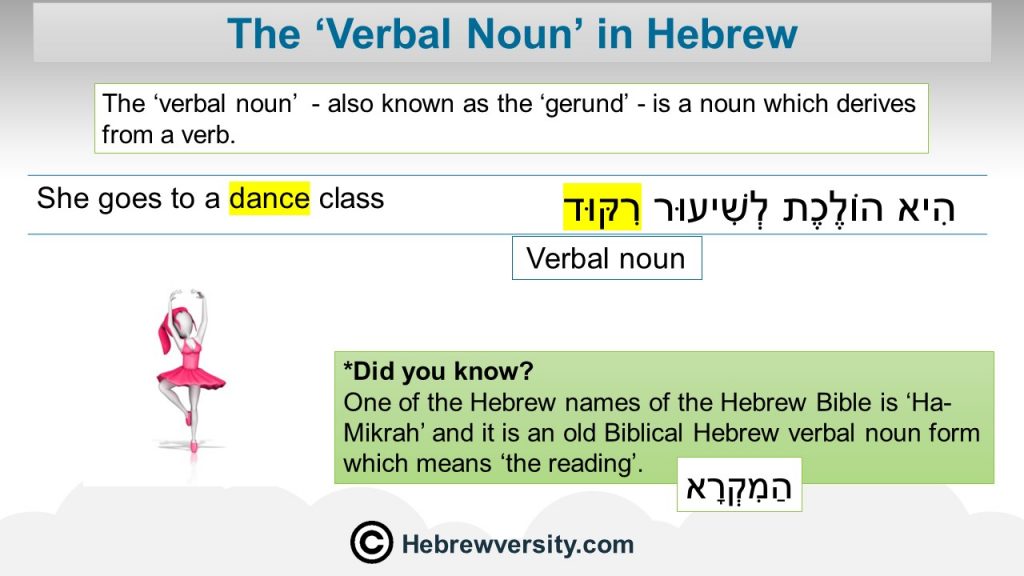
In Hebrew grammar, the verbal noun – known as שם הפעולה (shem ha-pe’ulah) – is a noun form that expresses the action or process of a verb. It’s similar to English words like “writing,” “running,” or “decision,” which are derived from verbs but function as nouns.
What Is a Verbal Noun?
A verbal noun represents the concept of the action, not the act of doing it. It answers the question: “What is the name of this activity?”
For example:
- Verb: לכתוב (lichtov) – to write
- Verbal noun: כתיבה (ktivah) – writing
- Verb: לרוץ (larutz) – to run
- Verbal noun: ריצה (ritzah) – running
- Verb: להחליט (lehachlit) – to decide
- Verbal noun: החלטה (hachlatah) – decision
How It’s Formed
Each binyan (verb pattern) has its own way of forming verbal nouns. These forms are usually predictable, but there are exceptions. The verbal noun often resembles a feminine noun and is treated grammatically as such.
Examples by binyan:
- פָּעַל: כתיבה, קריאה
- פִּעֵל: דיבור, ניסיון
- הִפְעִיל: החלטה, הבנה
- התפעל: התכתבות, התנגדות
Usage in Sentences
Verbal nouns are used like any other noun:
- אני אוהב כתיבה יצירתית – I love creative writing
- ההחלטה הייתה קשה – The decision was difficult
- ההתנגדות גוברת – The opposition is growing
They are especially common in formal, academic, and written Hebrew, but also appear in everyday speech.