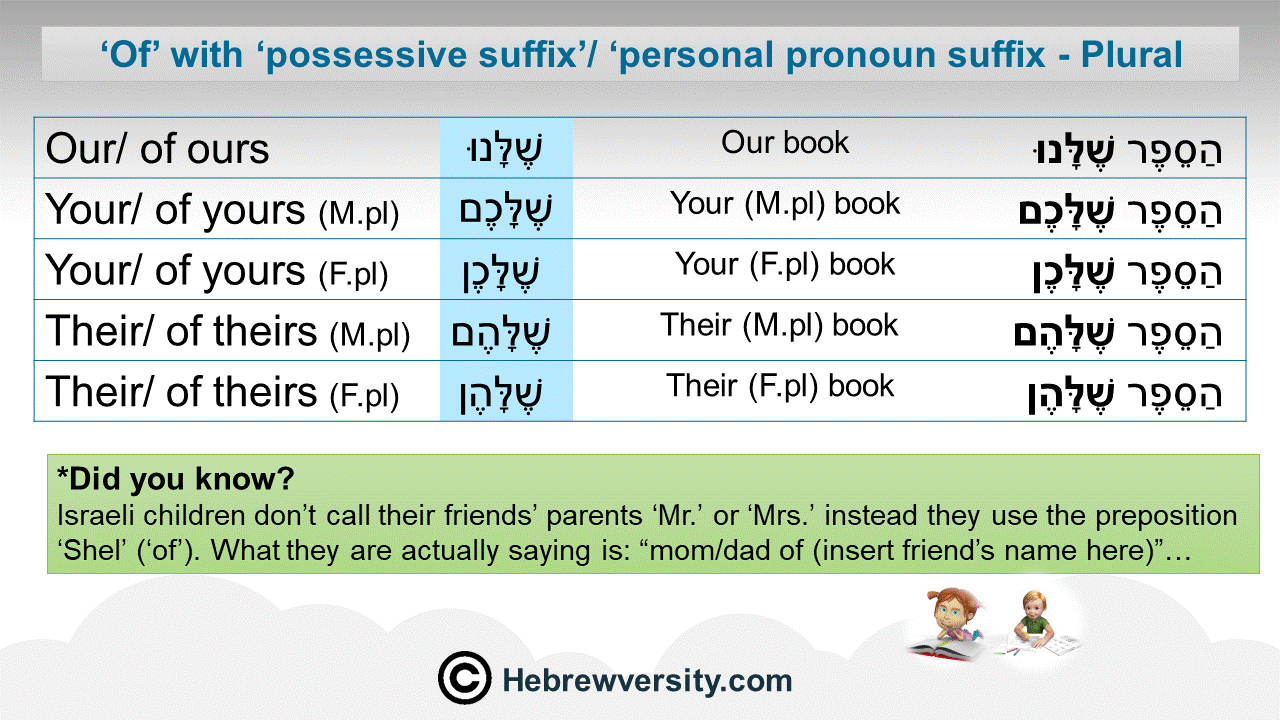
Hebrew expresses possession in two main ways: using prepositional structures and suffixes. Unlike English, which uses words like “my,” “your,” or “his” before nouns, Hebrew often places the possessive idea after the noun or uses a special form of the word.
- Using “של” (shel) – “of”
The most common way to express possession is with the word של (shel), which means “of.” It’s followed by a pronoun or noun to indicate the owner.
Structure:
noun + shel + pronoun/name
Examples:
- הספר שלי (ha-sefer sheli) – my book
- המכונית שלך (ha-mechonit shelcha / shelach) – your car (m./f.)
- הבית שלו (ha-bayit shelo) – his house
- העבודה שלה (ha-avodah shelah) – her job
- הילדים שלנו (ha-yeladim shelanu) – our children
- החברים שלהם (ha-chaverim shelahem) – their friends
This form is very common in both spoken and written Hebrew.
- Possessive Suffixes (mainly in formal or Biblical Hebrew)
In older or more formal Hebrew, possession is expressed by adding a suffix directly to the noun. This is less common in modern speech but still appears in literature, prayers, and idioms.
Examples:
- ספרי (sifri) – my book
- מכוניתך (mechonitcha / mechonitech) – your car (m./f.)
- ביתו (beito) – his house
- עבודתה (avodatah) – her job
These forms are elegant but mostly used in poetic or formal contexts.
Notes
- The word של can also be used with proper names:
הספר של דנה (ha-sefer shel Dana) – Dana’s book
המכתב של המורה (ha-michtav shel ha-moreh) – the teacher’s letter - When using של, the noun stays in its regular form; no suffix is added.