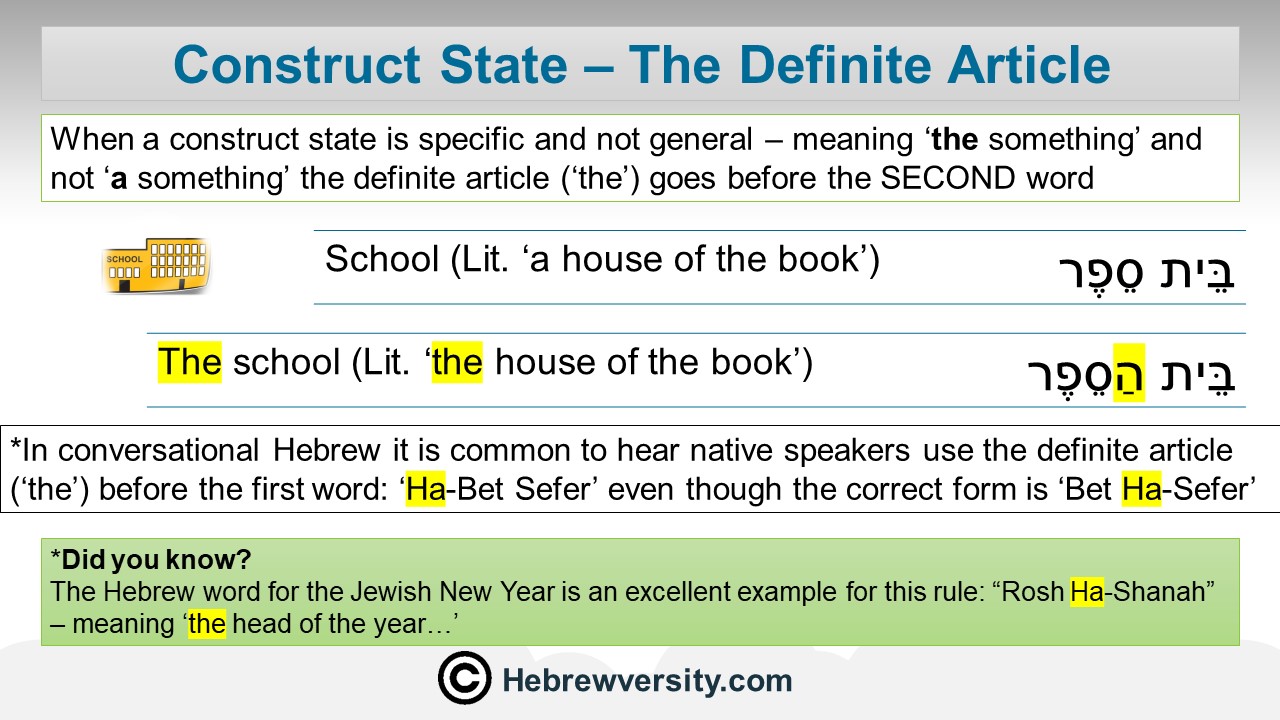
In Hebrew, the construct state (Smichut) is a grammatical structure that links two nouns to express possession or association. This structure affects how numbers behave, how plurals are formed, and how definiteness is expressed.
Let’s break it down:
1. Numbers in Construct
When numbers are used before a noun in Smichut, they take a special construct form. This is especially noticeable with numbers from 2 to 10.
Examples:
- שְׁנֵי יְלָדִים – two boys
- שְׁתֵּי בָּנוֹת – two girls
- אַרְבַּעַת אֲלָפִים – four thousands
- אַלְפֵי אֲנָשִׁים – thousands of people
These forms are used only when the number is followed by a noun. The regular counting forms are used when the number stands alone.
2. Plural Construct Forms
In older forms of Hebrew (like Rabbinic Hebrew), you might see “double plural” constructs (e.g., בָּתֵּי כְּנֵסִיּוֹת), but in Modern Hebrew, only the first word is pluralized.
3. Definiteness in Smichut
When a construct phrase is definite (“the something”), the definite article (ה־, “the”) is placed only on the second noun. The first noun never takes ה־ in Smichut.
Examples:
- בֵּית סֵפֶר – a school
- בֵּית הַסֵּפֶר – the school
- גַּן יְלָדִים – a children’s garden
- גַּן הַיְלָדִים – the children’s garden