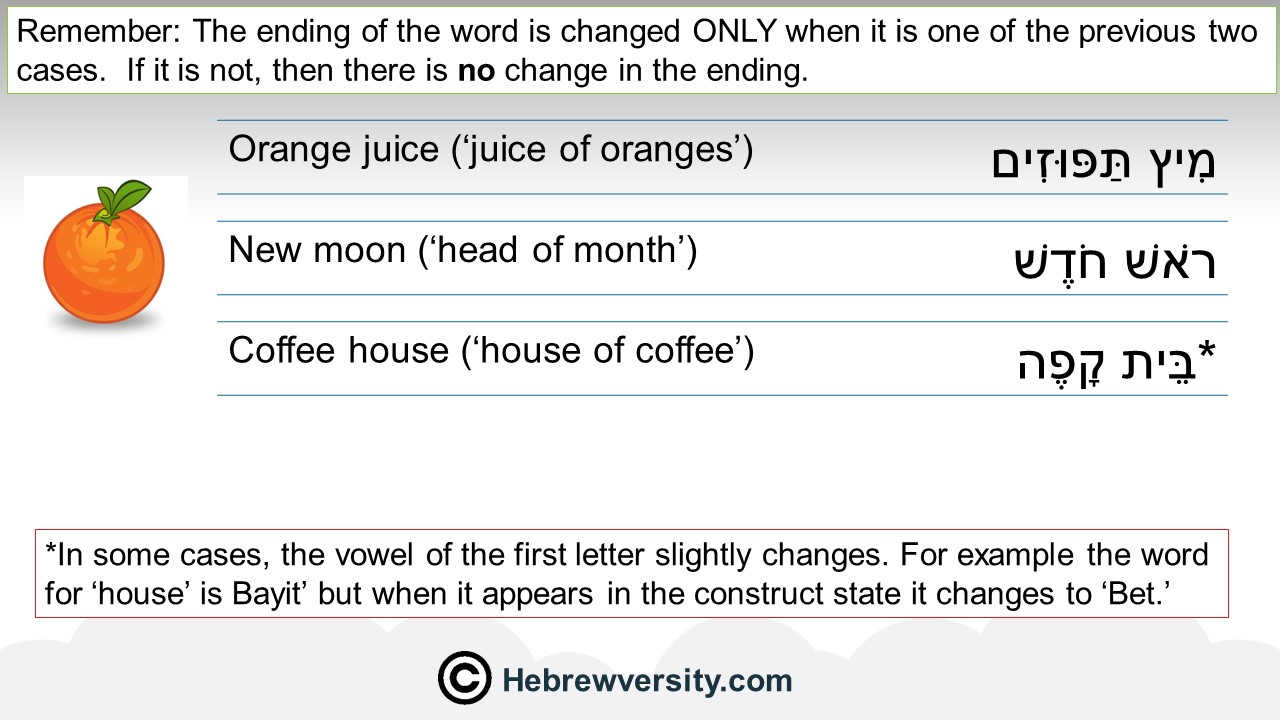
In Hebrew, Smichut (סְמִיכוּת) is a grammatical structure that links two nouns to express possession or association – like “door of the house.” Instead of using a word like “of,” Hebrew modifies the first noun to reflect its connection to the second.
This modified form is called the construct state, and it often changes the ending of the first word in the pair.
How Smichut Changes Word Endings
The construct form doesn’t follow gender rules consistently, but it does follow spelling patterns. Two common types of changes occur:
- Words ending in –ה (Heh)
These often change the final letter to –ת (Tav) in the construct state.
Examples:- מִלָּה → מִלַּת סוֹד (word → secret word)
- שָׁעָה → שְׁעַת פְּגִישָׁה (hour → meeting hour)
- Words ending in –ים (Yod-Mem)
These often drop the –ים ending and take a shortened construct form.
Examples:- סְפָרִים → סִפְרֵי מֶתַח (books → thriller books)
- גַּנִּים → גַּנֵּי יְלָדִים (gardens → kindergartens / children’s gardens)
These changes are structural and based on spelling – not gender – and are essential for forming compound nouns correctly.