
Conjunctions are the connectors of language. In Hebrew, they link words, phrases, and clauses – just like “and,” “but,” or “or” in English. Mastering Hebrew conjunctions helps learners build longer, more expressive sentences.
Most Common Conjunctions
| English | Hebrew | Transliteration | Usage Example |
| and | וְ | ve | אני קורא וְכותב – I read and write |
| or | או | o | קפה או תה? – Coffee or tea? |
| but | אבל | aval | הוא רצה לבוא, אבל איחר – He wanted to come, but he was late |
| so/then | אז | az | אז נלך עכשיו – So let’s go now |
| because | כי | ki | אני נשאר כי אני עייף – I’m staying because I’m tired |
| that | שֶׁ | she | אני יודע שֶׁאתה צודק – I know that you’re right |
The Conjunctive Vav (וְ)
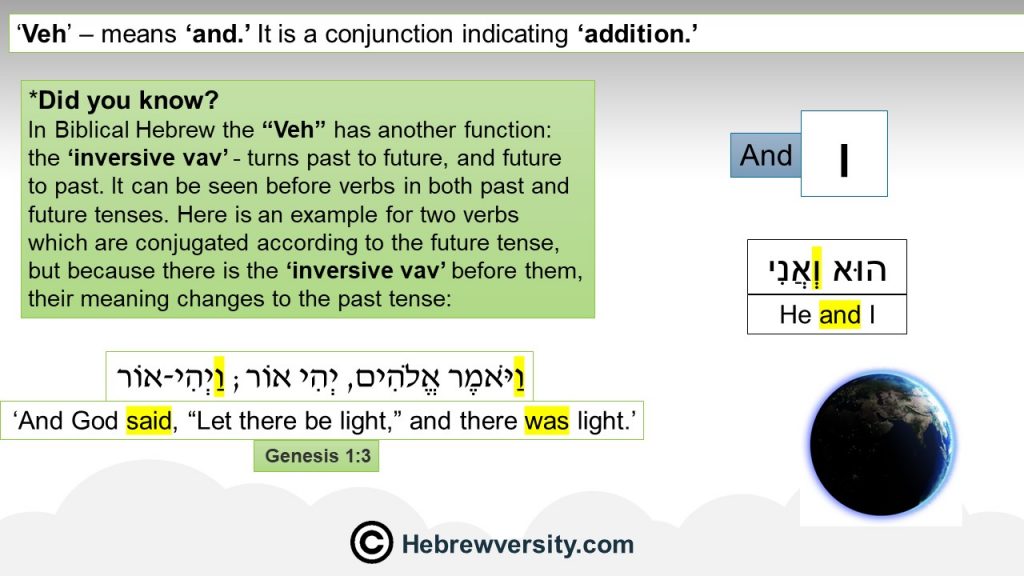
The most frequent conjunction in Hebrew is the prefix וְ (ve) meaning “and.” It attaches directly to the beginning of a word:
- ספר ועט (sefer ve’et) – book and pen
- הוא אכל ושתה (hu achal ve-shatah) – he ate and drank
Note: The vowel under the ו may change depending on the word it’s attached to.
Formal and Biblical Conjunctions
In biblical or poetic Hebrew, you may encounter older or more formal conjunctions:
- אֵפוֹא (eifo) – therefore
- לָכֵן (lachen) – thus, therefore
- אַךְ (ach) – however, yet
These forms add nuance and elegance, and are common in scripture, prayers, and literary texts.