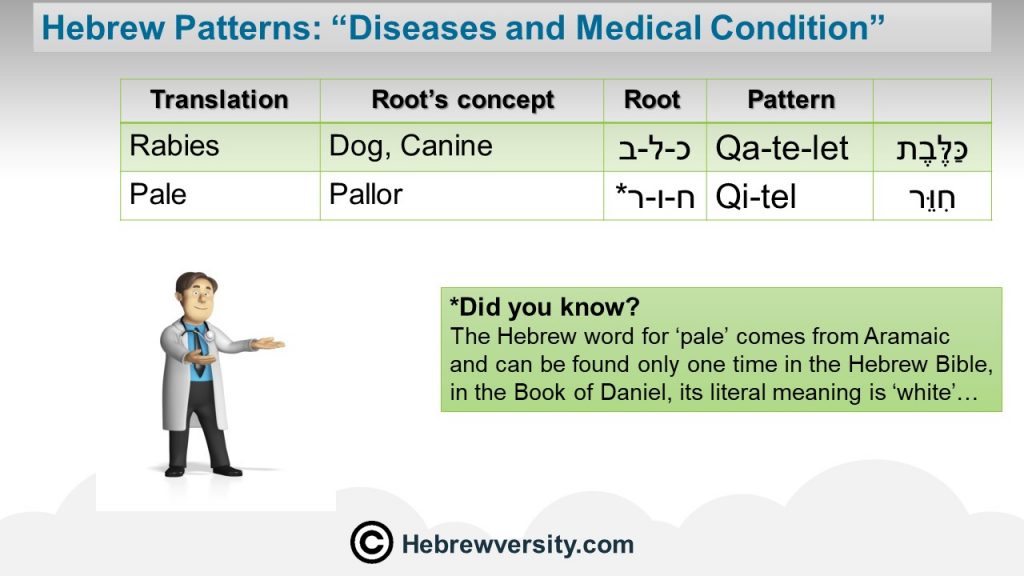
In Hebrew, noun and adjective patterns (מִשְׁקָלִים) are structural templates that shape how roots (שׁוֹרָשִׁים) become meaningful words. Each pattern gives a different grammatical or semantic role – such as tools, places, professions, qualities, or abstract ideas. Theoretical descriptions often use the root ק.ט.ל to illustrate the pattern’s form.
Let’s explore several key mishkalim by function:
Tools and Instruments
The pattern מַקְטֵל (maktel) is commonly used for tools or devices. For example, מַחְשֵׁב (machshev) means “computer,” built from the root ח.ש.ב (to think). Another example is מַסְרֵק (masrek), meaning “comb,” from ס.ר.ק (to comb). A third is מַצְלֵמָה (matzlemah), meaning “camera,” from צ.ל.מ (to photograph). These words reflect objects designed to perform specific actions.
Places and Locations
The pattern מִקְטָל (miktal) often indicates places where actions occur. For instance, מִשְׁרָד (mishrad) means “office,” from ש.ר.ד (to manage). מִפְעָל (mif’al) means “factory,” from פ.ע.ל (to work), and מִקְדָּשׁ (mikdash) means “sanctuary,” from ק.ד.ש (to sanctify). These nouns describe physical spaces tied to activity or purpose.
Professions and Agents
The pattern קָטָל (katal) is used for people who perform actions or hold roles. For example, סַפָּן (sapan) means “sailor,” from ס.פ.נ (to sail). גַּנָּן (ganan) means “gardener,” from ג.נ.ן (to garden), and נָהָג (nahag) means “driver,” from נ.ה.ג (to drive). These words identify professions or agents of action.
Adjectives and Qualities
Patterns like קָטֵל and קָטִיל (katel / katil) describe traits or qualities. חָכָם (chacham) means “wise,” from ח.כ.ם (wisdom). רָעִיל (ra’il) means “poisonous,” from ר.ע.ל (poison), and יָפֶה (yafeh) means “beautiful,” from י.פ.י (beauty). These adjectives reflect inherent characteristics.