Nif’al is the passive counterpart of Pa’al. Verbs in this binyan often describe actions that happen to the subject, rather than actions the subject performs. In some cases, Nif’al verbs express reflexive or spontaneous actions, similar to Hitpa’el.
Structure of Nif’al in Present Tense
- Prefix: נִ (ni-)
- Vowel Pattern: i-a (as in נִכְנָס – “enters”)
- Infinitive Form: לְהִפָּעֵל – using פ.ע.ל as the placeholder root
The base form is: נִפְעָל – where פ.ע.ל is the sample root
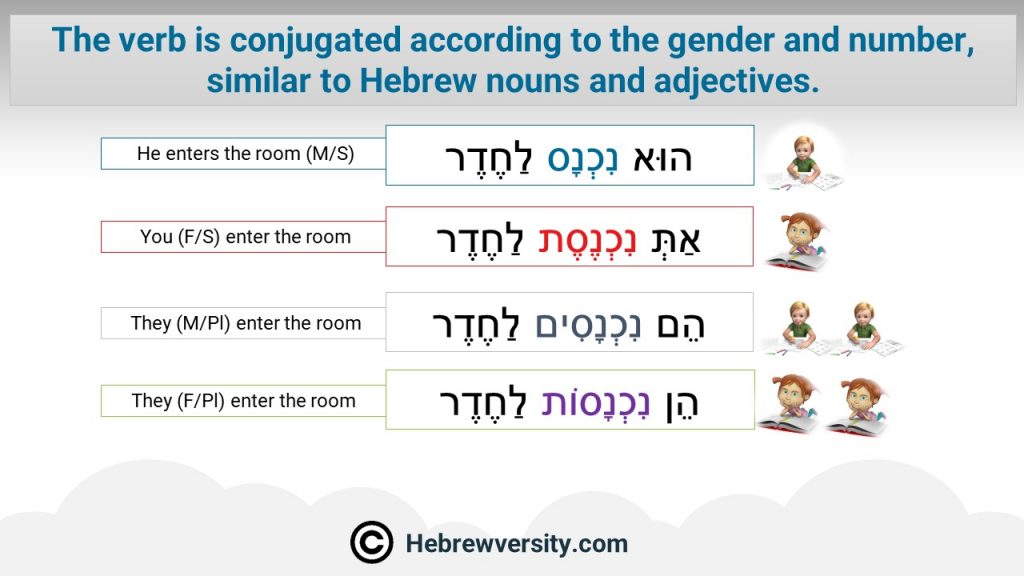
Conjugation Table (Using כ.נ.ס – “to enter”)
| Person & Gender | Hebrew Form | Transliteration | English Meaning |
| Masculine Singular | נִכְנָס | nikhnas | He enters |
| Feminine Singular | נִכְנֶסֶת | nikhneset | She enters |
| Masculine Plural | נִכְנָסִים | nikhnasim | They (m) enter |
| Feminine Plural | נִכְנָסוֹת | nikhnasot | They (f) enter |
Infinitive: לְהִכָּנֵס (lehikkanes)
Common Nif’al Verbs in Present Tense
| Verb (Present) | Transliteration | Infinitive | Meaning |
| נִכְנָס | nikhnas | לְהִכָּנֵס | enters |
| נִסְגָּר | nisgar | לְהִסָּגֵר | is closed |
| נִפְגָּשׁ | nifgash | לְהִפָּגֵשׁ | meets (is met) |
| נִשְׁמָר | nishmar | לְהִשָּׁמֵר | is guarded |
| נִלְמָד | nilmad | לְהִלָּמֵד | is learned / taught |
Tip for Learners
Nif’al verbs often describe what happens to the subject, rather than what the subject does. Look for the נִ prefix and the i-a vowel pattern to identify them in the present tense. Many of these verbs are passive in meaning, but some are reflexive or spontaneous.