Hif’il is the causative binyan in Hebrew. In the future tense, it describes actions that the subject will cause to happen or initiate. These verbs often express influence, activation, or transfer – such as “he will bring in,” “she will influence,” or “they will succeed.”
Structure of Hif’il in Future Tense
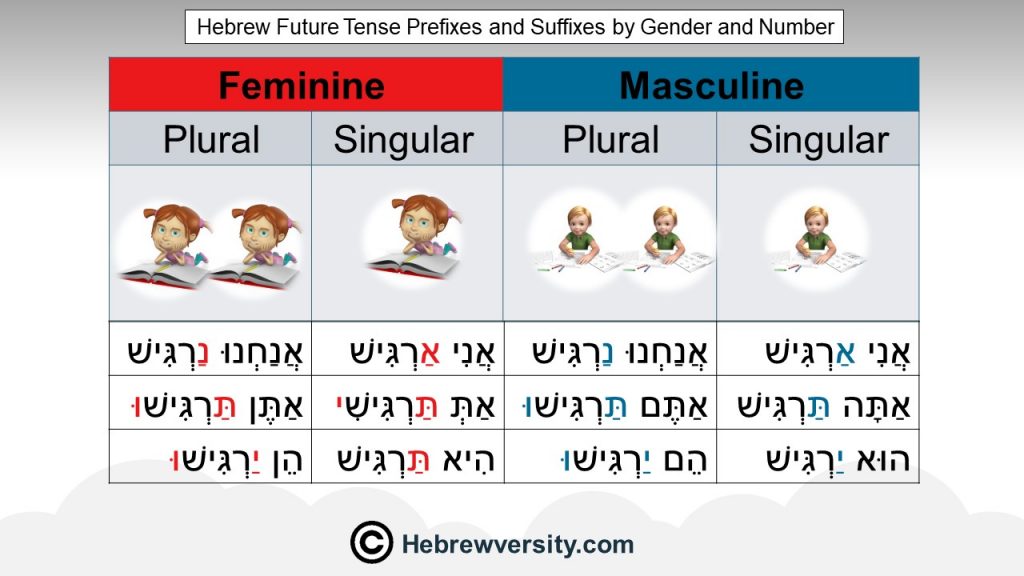
- Prefixes: א / ת / י / נ (depending on person)
- Vowel Pattern: a–i (as in אַכְנִיס – “I will bring in”)
- Base Form: יַכְנִיס – masculine singular, 3rd person
The base form is: יַכְנִיס – using the root כ.נ.ס
Conjugation Table (Using כ.נ.ס – “to bring in”)
| Person & Gender | Hebrew Form | Transliteration | English Meaning |
| I | אַכְנִיס | akhnis | I will bring in |
| You (m) | תַּכְנִיס | takhnis | You will bring in |
| You (f) | תַּכְנִיסִי | takhnisi | You will bring in |
| He (base form) | יַכְנִיס | yakhnis | He will bring in |
| She | תַּכְנִיס | takhnis | She will bring in |
| We | נַכְנִיס | nakhnis | We will bring in |
| You (pl) | תַּכְנִיסוּ | takhnisu | You will bring in |
| They | יַכְנִיסוּ | yakhnisu | They will bring in |
Common Hif’il Verbs in Future Tense
| Base Form | Transliteration | Meaning |
| יַכְנִיס | yakhnis | will bring in |
| יַפְעִיל | yaf’il | will activate |
| יַגְדִּיל | yagdil | will enlarge |
| יַשְׁפִּיעַ | yashpi’a | will influence |
| יַצְלִיחַ | yatzliakh | will succeed |
Tip for Learners
Hif’il verbs in the future tense describe actions the subject will cause. They’re easy to recognize by their prefixes and the a–i vowel pattern. The masculine singular form (יַכְנִיס) is the base form used in dictionaries.