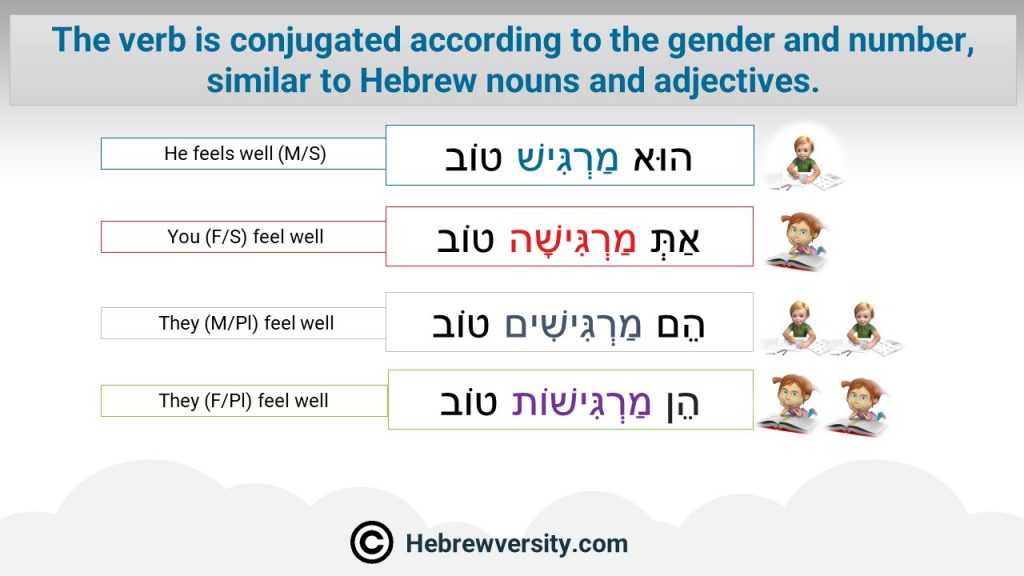
Hif’il is the causative binyan in Hebrew. Verbs in this pattern often mean “to cause someone to do something” or “to make something happen.” For example, while Pa’al might mean “to eat,” Hif’il could mean “to feed.”
Structure of Hif’il in Present Tense
- Prefix: מַ (ma-)
- Vowel Pattern: a–i (as in מַכְנִיס – “brings in”)
- Infinitive Form: לְהַפְעִיל – using פ.ע.ל as the placeholder root
The base form is: מַפְעִיל – where פ.ע.ל is the sample root
Conjugation Table (Using כ.נ.ס – “to bring in”)
| Person & Gender | Hebrew Form | Transliteration | English Meaning |
| Masculine Singular | מַכְנִיס | makhnis | He brings in |
| Feminine Singular | מַכְנִיסָה | makhnisah | She brings in |
| Masculine Plural | מַכְנִיסִים | makhnisim | They (m) bring in |
| Feminine Plural | מַכְנִיסוֹת | makhnisot | They (f) bring in |
Infinitive: לְהַכְנִיס (lehakhnis)
Common Hif’il Verbs in Present Tense
| Verb (Present) | Transliteration | Infinitive | Meaning |
| מַפְעִיל | maf’il | לְהַפְעִיל | activates |
| מַגְדִּיל | magdil | לְהַגְדִּיל | enlarges |
| מַכְנִיס | makhnis | לְהַכְנִיס | brings in |
| מַצְלִיחַ | matzliakh | לְהַצְלִיחַ | succeeds |
| מַשְׁפִּיעַ | mashpi’a | לְהַשְׁפִּיעַ | influences |
Tip for Learners
Hif’il verbs are easy to spot in the present tense thanks to the מַ prefix and the a–i vowel pattern. They often describe actions that affect others or initiate change.