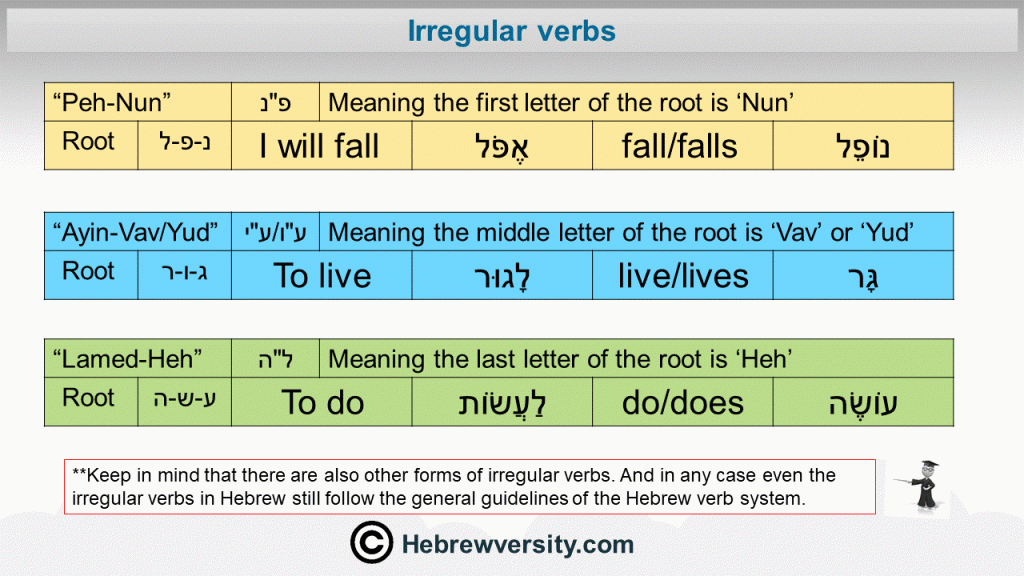
While most Hebrew verbs follow predictable patterns based on their root and binyan (verb pattern), there are several groups of irregular verbs that break the standard rules. These verbs are essential to learn because they appear frequently in everyday Hebrew.
What Makes a Verb Irregular?
Irregular verbs deviate from the expected conjugation patterns due to:
- Missing or weak root letters (like א, ה, or ע)
- Letters that change or drop in certain forms
- Unusual vowel shifts or stress patterns
These changes affect how the verb is conjugated across tenses and persons.
Common Classes of Irregular Verbs
Hebrew grammar traditionally divides irregular verbs into several categories:
- Peh-Alef (פ״א) – Verbs whose first root letter is א
Example: אכל (achal – to eat)- Present: אוכל (ochel)
- Past: אכלתי (achalti)
- Peh-Nun (פ״נ) – Verbs that begin with נ, which may drop in some forms
Example: נפל (nafal – to fall)- Future: אפול (epol) instead of נפול
- Ayin-Vav/Yud (ע״ו/ע״י) – Verbs with a weak middle root letter
Example: קום (kum – to get up)- Future: אקום (akum)
- Imperative: קום! (kum!)
- Lamed-Heh (ל״ה) – Verbs ending in ה, which often drops or changes
Example: ראה (ra’ah – to see)- Future: אראה (er’eh)
- Past: ראיתי (ra’iti)
These verbs require special attention because their forms may look different from what learners expect based on regular binyan rules.
Why Learn Irregular Verbs?
Irregular verbs are not rare exceptions – they’re part of everyday Hebrew. Many of the most common verbs (to eat, to go, to see, to come) fall into these categories. Learning their patterns helps you:
- Understand native speakers
- Conjugate correctly in conversation
Recognize familiar verbs in unfamiliar forms