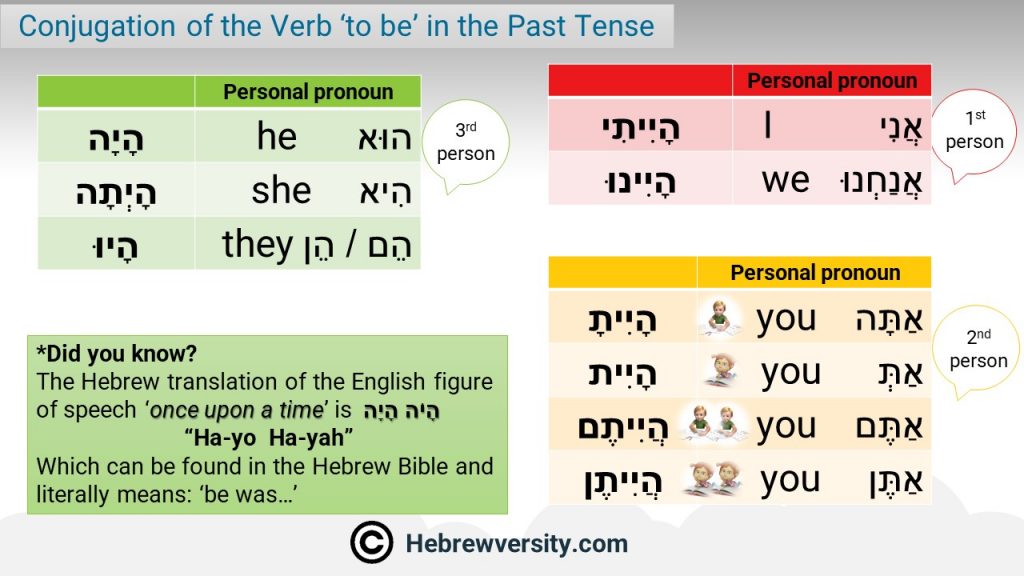
In Hebrew, the verb “to be” is expressed using forms of the verb הָיָה (hayah), meaning “was.” Unlike English, Hebrew does not use a present-tense form of “to be” (there’s no word for “is” or “are”), but in the past tense, the verb appears explicitly and is fully conjugated.
Why It Matters
Whether you’re learning modern Hebrew or exploring Biblical texts, understanding how “to be” works in the past tense is essential. It allows you to describe:
- Who someone was
- Where something was
- What something was like
This verb is used to express identity, location, and state in the past.
Conjugation of הָיָה – “To Be” (Past Tense)
| Person & Gender | Hebrew Form | Transliteration | English Meaning |
|---|---|---|---|
| I | הָיִיתִי | hayiti | I was |
| You (m) | הָיִיתָ | hayita | You were (m) |
| You (f) | הָיִיתְ | hayit | You were (f) |
| He | הָיָה | hayah | He was |
| She | הָיְתָה | hayetah | She was |
| We | הָיִינוּ | hayinu | We were |
| You (pl) | הֱיִיתֶם / הֱיִיתֶן | heyitem / heyiten | You were (pl m/f) |
| They | הָיוּ | hayu | They were |
Examples in Modern Hebrew
- היא הייתה עייפה – She was tired
- אנחנו היינו בבית – We were at home
- הם היו שמחים – They were happy
- אני הייתי תלמיד טוב – I was a good student
Quick Tips for Learners
-
In present tense, Hebrew omits “to be”:
Example: הוא רופא – “He is a doctor” (no verb needed) -
In past tense, you must use the correct form of הָיָה to match the subject.
-
The verb הָיָה is irregular, so it’s best to memorize its forms individually.
This content is fully original and tailored for your site. Let me know if you’d like a matching post for “to be” in future tense or for verbless clauses.